Residential Hedge Trimming vs Commercial Hedge Maintenance: Key Differences
But when you’re comparing a typical home job to what’s expected on a business property, the gap gets big fast. Expectations, liability, scheduling, equipment, even the way the hedges are shaped and measured. It is not just “more hedges”. It is a different kind of work.
So let’s break down Residential Hedge Trimming vs Commercial Hedge Maintenance: Key Differences in a way that actually helps you decide what you need, what you should pay attention to, and why quotes can look so different.
The simplest difference is the goal
Residential work is usually personal. You want the yard to look nice, maybe a bit cleaner around the driveway, maybe you want privacy back because the hedge got wild. Sometimes it is about keeping peace with a neighbor. Sometimes it is just, “I’m tired of looking at this thing.”
Commercial work is about image and consistency. Businesses want the property to look intentional every day, not just after a once a year cleanup. Even if nobody says it out loud, landscaping is part of branding. A tight, even hedge line says the property is cared for. A shaggy, uneven one says the opposite, even if the business inside is great.
That is the first big point in Residential Hedge Trimming vs Commercial Hedge Maintenance: Key Differences. The end goal is different, so the whole approach changes.
Frequency and scheduling are not even close
Most homeowners trim hedges a few times a year, depending on the species and how fast it grows. Some do spring and late summer. Others do one bigger trim and call it good.
Commercial sites often run on a set schedule. Weekly, biweekly, or monthly, and it is planned around foot traffic, business hours, deliveries, tenant needs, and sometimes noise restrictions. A crew might need to be done before 9am. Or they can only do loud trimming on certain days. Or the work has to be staged across multiple zones so entrances stay open.
This is one of those Residential Hedge Trimming vs Commercial Hedge Maintenance: Key Differences that affects price a lot. It is not only “how long does it take”. It is also “how hard is it to fit this into a tight window without disrupting anyone.”
Scope of work and what “maintenance” really means
Homeowners often want trimming, shaping, and cleanup. Maybe a little reduction if the hedge is too tall. Sometimes they also want some dead wood taken out, but it is not always requested.
Commercial maintenance usually includes more than trimming. It can include:
- Height and width control to keep lines consistent across the whole property
- Visibility clearance at corners, drive lanes, and signage
- Walkway clearance for safety and accessibility
- Regular debris removal so it looks clean right after the crew leaves
- Seasonal planning, so growth spurts are anticipated rather than “fixed later”
That is why Residential Hedge Trimming vs Commercial Hedge Maintenance: Key Differences is not just a wording thing. “Maintenance” is ongoing performance and appearance. “Trimming” is often a single event.
Standards and measuring matter more in commercial work
At home, “straight” is often good enough. Even if the hedge has a few dips, most people do not care as long as it looks better than before.
Commercial hedges get judged harshly. People notice symmetry when the hedge runs along a storefront or frames an entryway. Property managers notice, too. So crews often use tighter visual standards, and sometimes literal measuring. Clean lines, matching heights, square corners, consistent taper. Especially if the site is high visibility.
This is a subtle but real part of Residential Hedge Trimming vs Commercial Hedge Maintenance: Key Differences. Commercial work is more like maintaining a “feature” than just cutting back growth.
Liability and safety requirements are bigger on commercial sites
At a home, risk exists, but it is contained. One driveway, one family, fewer moving parts.
Commercial properties have more variables and more people. Pedestrians. Customers. Employees. Vehicles. Delivery trucks. Public sidewalks. That changes everything.
A commercial crew may need cones, caution tape, spotters, and a plan for where debris goes so nobody slips. They also have to think about things like:
- Keeping entrances accessible
- Not blocking fire lanes
- Not blowing clippings toward open doors or outdoor dining
- Managing noise and dust in active areas
- Preventing trip hazards from cords or equipment staging
This is one of the most overlooked Residential Hedge Trimming vs Commercial Hedge Maintenance: Key Differences, and it is a big reason commercial service often costs more, even if the hedge line itself is not massive.
Equipment tends to scale up fast
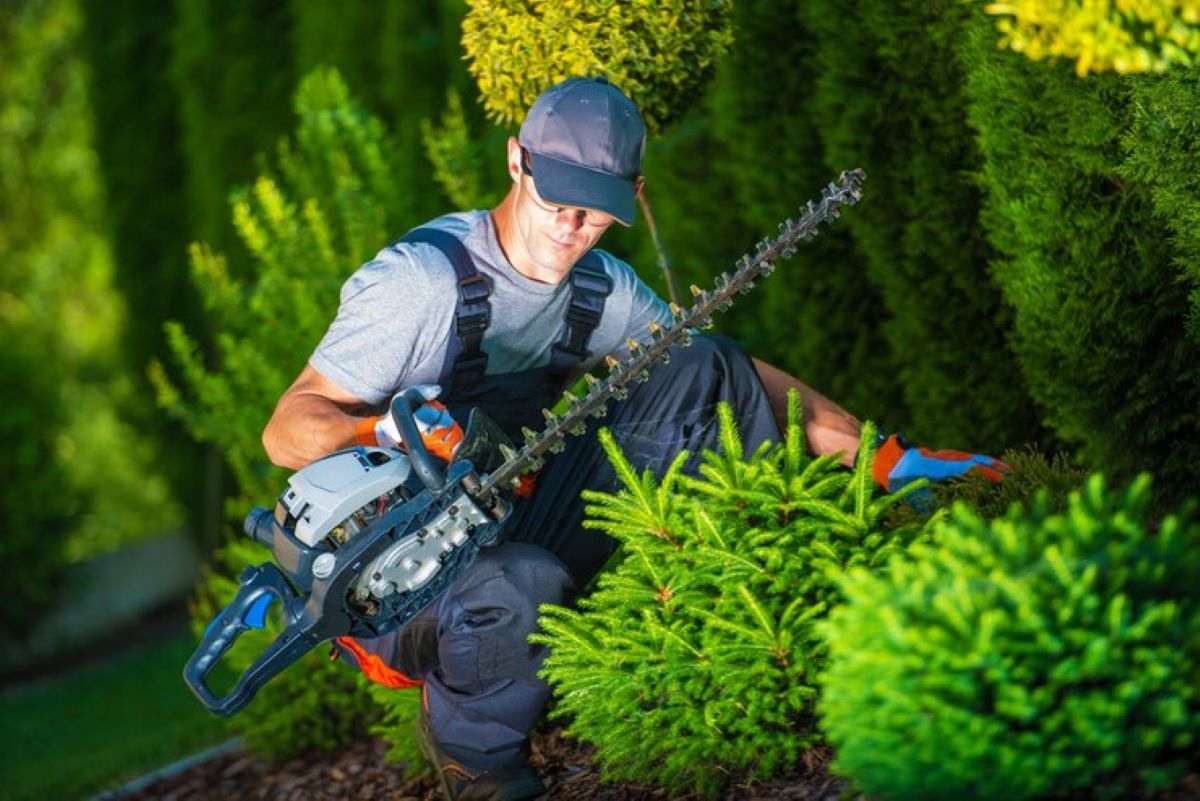
A homeowner might use a handheld electric trimmer or a small gas unit. A residential crew might bring commercial grade handhelds, pole trimmers, ladders, and maybe a small chipper depending on the work.
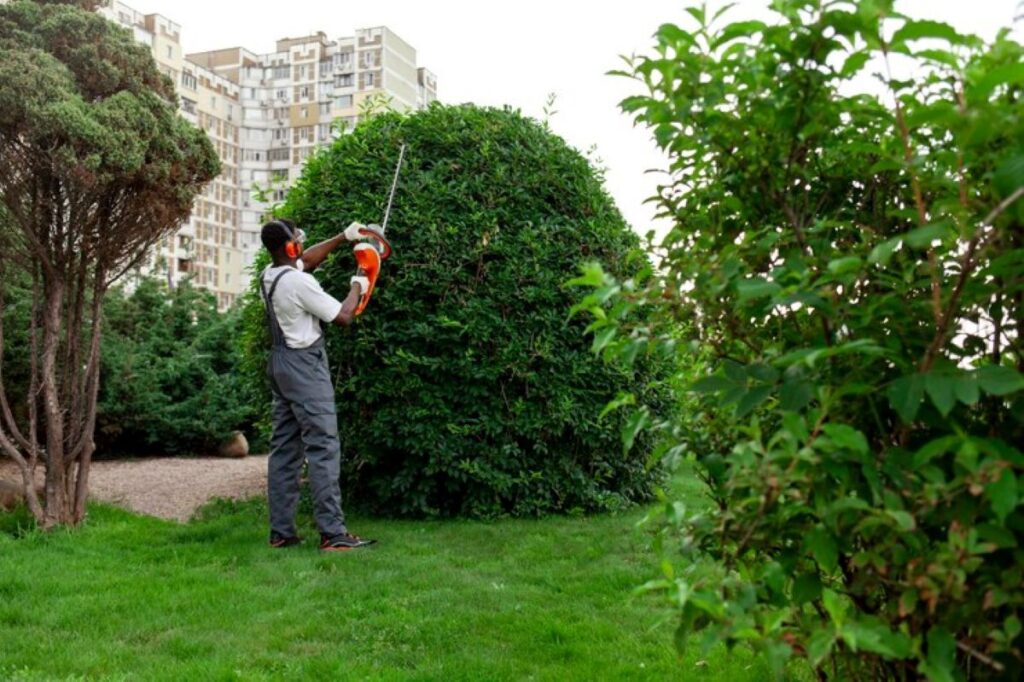
Commercial hedge maintenance tends to mean heavier duty gear, more redundancy, and faster production. Longer runs of hedging, larger properties, and tighter time windows push crews into using:
- Multiple trimmers running at once
- Pole hedge trimmers for tall hedges
- Larger blowers for quick cleanup
- Dump trailers or box trucks for debris hauling
- Sometimes lift equipment for extreme height work (less common, but it happens)
In Residential Hedge Trimming vs Commercial Hedge Maintenance: Key Differences, equipment is not just a preference. It is often the only way to meet the time and consistency expectations.
Cleanup expectations are different, too
Homeowners usually want it tidy, but they might be okay with “good enough” if the price is right. Some even want clippings left for compost or pickup later.
Commercial properties need clean, now. Not later. The sidewalk cannot be littered with green bits. Parking lots can’t have piles of trimmings that get driven over and tracked into stores. Entrance areas have to look finished immediately.
So commercial work usually includes a more intensive cleanup step. More blowing, more bagging, more hauling. Sometimes even checking storm drains or grates to ensure debris is not sitting there.
When you look at Residential Hedge Trimming vs Commercial Hedge Maintenance: Key Differences, cleanup is one of those things that sounds small until you watch a crew spend 30 to 45 minutes just making the site look perfect after the cutting is done.

Plant health strategy shows up more in commercial contracts
Homeowners care about plant health, sure, but many want the hedge to look a certain way first. And it is easy to delay trimming until it’s obviously overgrown.
Commercial maintenance plans often factor in plant health earlier because replacement is expensive and looks bad. Some sites have a uniform hedge species across the entire property. If one section declines, it breaks the whole visual line.
Commercial crews may pay closer attention to:
- Not trimming too aggressively during heat stress
- Timing cuts to avoid shocking plants
- Avoiding repeated shearing that causes hollow hedges over time
- Spotting disease or pest issues early before it spreads
- Managing irrigation overspray or dry zones around foundation plantings
This is another key point in Residential Hedge Trimming vs Commercial Hedge Maintenance: Key Differences. Commercial work is more preventative because the consequences are bigger and more visible.
Access issues are usually harder on commercial properties
At a home, access is straightforward. Gates, side yards, backyards, done.
Commercial sites can be awkward. Hedges might be in narrow planters with parked cars inches away. There may be storefront windows right behind the hedge. There may be security rules. Some places require check in. Some require proof of insurance on file. Some have strict rules about where trucks can park or idle.
And then there is timing. You might be trimming next to a busy lunch rush, or while a medical office is open, or during a school drop off window. Access is not “walk up and start.” It is coordinated.
So yes, Residential Hedge Trimming vs Commercial Hedge Maintenance: Key Differences includes simple logistics. But those logistics are what make the job smooth or miserable.
Communication and approvals are a bigger deal in commercial work
Residential clients often talk directly to the person doing the work. Quick decisions happen on the spot. “Can you take a little more off that corner?” Sure.
Commercial properties often have layers. Tenant. Property manager. Facility manager. HOA board. Sometimes a corporate office. And each one has opinions. Work requests can be written, documented, and approved. Photos might be needed. Reports might be needed. Schedules might be locked in weeks ahead.
This is one of the less glamorous Residential Hedge Trimming vs Commercial Hedge Maintenance: Key Differences, but it affects the entire experience. Commercial work is usually more formal and process driven.
Pricing is built differently
A homeowner quote might be based on:
- Hedge length and height
- Overgrowth level
- Access and cleanup
- One time service vs seasonal service
Commercial pricing can be based on a maintenance agreement, which spreads cost across the season and includes a predictable schedule. It may also include line items for extras like heavy reductions, removals, disposal fees, or after hours visits.
And there is another factor. Commercial bids often include overhead that residential clients never think about, like insurance requirements, admin time, reporting, compliance, and staffing to guarantee service even if someone calls out sick.
So when you compare Residential Hedge Trimming vs Commercial Hedge Maintenance: Key Differences, pricing is not just about size. It is about reliability, risk, and repeatability.
A quick reality check on “hedge trimming” techniques
This part matters because a lot of hedges fail slowly, and people blame weather or “bad plants” when it is actually the trimming style.
For many hedge types, especially those kept as formal screens, you want a slight taper. Wider at the bottom, narrower at the top. That lets sunlight hit the lower foliage so the hedge stays full.
Residential hedges often get cut straight up and down because it looks clean at first. But over time, the bottom thins out. Then you get that hollow look.
Commercial crews doing ongoing maintenance tend to be more consistent with shaping and tapering, because they see the hedge every few weeks and can correct growth before it gets out of control.
Another one of the practical Residential Hedge Trimming vs Commercial Hedge Maintenance: Key Differences. The technique has to match the long term goal.
When residential trimming becomes “commercial level” work
Sometimes a home job is basically commercial in disguise. It happens with:
- Very tall privacy hedges
- Long boundary hedges along a corner lot
- Multi property HOA style hedging
- Homes with intricate formal gardens where symmetry is the whole point
- Clients who want scheduled visits and exact consistency
In those cases, the homeowner may be surprised by pricing, but it makes sense. The work is not casual anymore. It is precision and repeatability.
This is where Residential Hedge Trimming vs Commercial Hedge Maintenance: Key Differences starts to blur. The property type matters less than the expectations. You may like to visit https://www.rta.qld.gov.au/podcast/gardens-and-maintenance to learn more about garden and maintenance.
What to ask before you hire anyone
If you are a homeowner:
- How often should this hedge be trimmed for density, not just appearance?
- Will you taper it slightly to keep the bottom full?
- How will cleanup and hauling be handled?
- Can you do reductions without killing the hedge, if it is too big right now?
If you manage a commercial property:
- What schedule do you recommend for the hedge species on site?
- How do you handle pedestrian safety and site control during work?
- Do you document visits or send before and after photos if requested?
- What is included in the base maintenance price vs add ons?
- Can you handle seasonal growth spikes without the site looking messy for weeks?
These questions pull the truth out fast. And they help you see the real Residential Hedge Trimming vs Commercial Hedge Maintenance: Key Differences before you sign anything.
The takeaway
Residential trimming is usually about getting the hedge back under control and making the home feel tidy again. Commercial hedge maintenance is about consistency, safety, and keeping a property looking sharp every day, even when nobody is thinking about it.
If you remember nothing else, remember this. The biggest Residential Hedge Trimming vs Commercial Hedge Maintenance: Key Differences is that residential work can be occasional and personal, while commercial work has to be systemized. And once it is systemized, everything changes. Scheduling, equipment, technique, cleanup, communication, liability.
And yeah, it is still “just hedges.” But not really. Not once people are walking past them all day, judging the place without realizing it.
Related : Storm Tree Removal in Sydney: What Happens and Who Is Responsible?